
The off-season checklist for tour operators: 12 jobs to do before next season
By Zakhar Habib · 20 November 2026

The off-season is when a small tour operator makes next season easier: review what happened, fix your prices and terms, refresh your itineraries, get vehicles and drivers ready, and open bookings early. This checklist covers the twelve jobs that matter most for owner-run tour companies, in the order we suggest doing them.
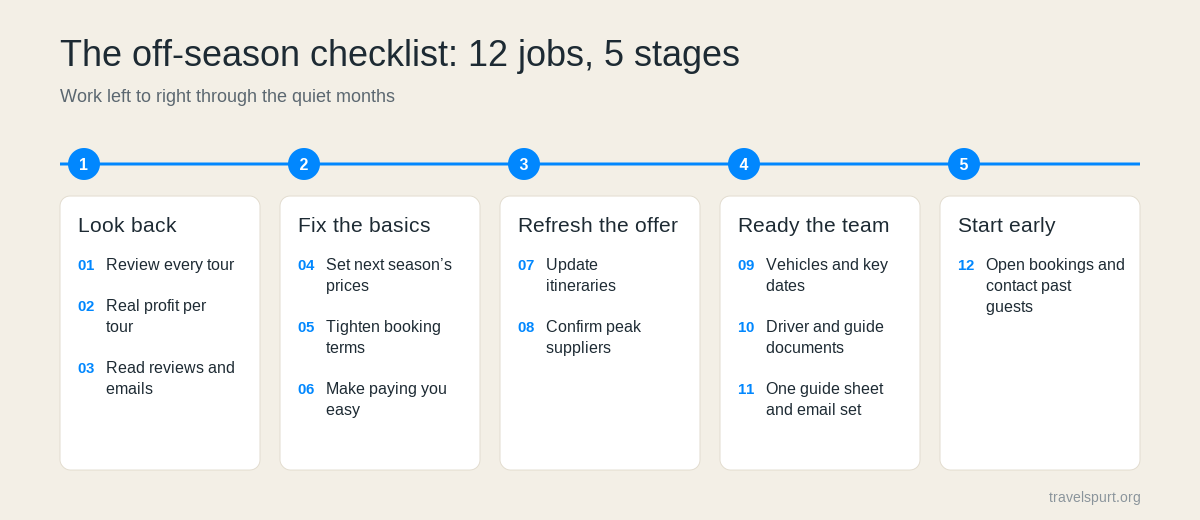
Look back before you plan forward
1. Review every tour you ran
Go through last season tour by tour while the details are fresh. For each one, note how many guests it carried, what you charged, what it actually cost and anything that went wrong on the day. You are looking for patterns: the tour that always sells out, the one that only just breaks even, the hotel that was late with confirmations.
2. Work out the real profit per tour
Revenue tells you which tours are popular. Profit tells you which ones are worth running. Add up guide and driver costs, fuel, accommodation, entry fees, meals and payment fees for each departure, and compare them with what guests paid. Our guide to calculating profit per tour walks through a worked example.
3. Read your reviews and guest emails
Guests tell you what to change, usually in plain words. Read every review and the replies to your post-trip emails, and group the comments: pace, accommodation, food, the guide, the vehicle, communication before the trip. Two or three themes will stand out. Those are your fixes for next year.
Fix the commercial basics
4. Set next season's prices now
Suppliers raise rates over the winter, and fuel and accommodation rarely get cheaper. Re-cost each tour with next year's rates, keep a margin you are comfortable with, and publish prices before the early planners start booking. Changing prices after people have enquired is awkward for everyone.
5. Tighten your booking terms
Check that your terms clearly state the deposit, when the balance is due, what happens if a guest cancels and what happens if you have to change the itinerary. If last season brought a dispute, the gap in your terms is usually obvious in hindsight. If you sell packages that combine transport and accommodation, check what the Package Travel Regulations ask of you, and take professional advice if you are unsure.
6. Make paying you easy
If you spent last season chasing bank transfers, move to one invoice per booking with an online payment link for the deposit and the balance. Our post on taking deposits and balances online sets out a simple system.
Refresh the product
7. Update your itineraries and activity descriptions
Restaurants close, opening hours change and ferries get retimed. Check every stop on every tour, rewrite descriptions that feel tired and replace photos you are not proud of. Keeping these in one activity library means every new itinerary starts from your best, current material instead of last year's copy and paste. For the layout itself, see how to write a day-by-day tour itinerary guests actually read.
8. Confirm suppliers for peak dates
Small hotels, distilleries and boat trips in popular areas fill early. Contact your key suppliers now, agree rates and hold rooms or slots for your busiest departures. Write down every confirmation against the tour it belongs to, not in a separate inbox folder.
Get the operation ready
9. Service vehicles and diary the key dates
Book servicing for the quiet months, and put every MOT, insurance renewal and service date for each vehicle in one calendar so nothing expires in July. Decide how drivers will record daily walkaround checks, and make it something they can do on a phone in a car park.
10. Check drivers' and guides' documents
Collect up-to-date copies of driving licences and, where your drivers need them, Driver CPC and tachograph cards, with their expiry dates. Confirm availability for next season with your regular guides before someone else books them.
11. Standardise the guide sheet and guest emails
Every departure needs the same core information: guests and their needs, pickups, the route, accommodation, supplier contacts and payments still due. Agree one guide sheet layout and one sequence of guest emails (welcome, forms, what to pack, final details), and use them for every tour. Our guide to building a guide sheet from a booking covers what to include.
Start next season early
12. Open bookings and talk to past guests
Your best source of next year's bookings is this year's guests and the people they tell. Send past guests a short note with next season's dates, ask happy guests for a review, and make sure your website shows current tours and prices. Enquiries that arrive in January are much easier to convert than ones that arrive in May.
Where TravelSpurt fits
TravelSpurt is the AI concierge for independent tour operators. You enter a booking once, and it produces the itinerary from your own activity library, the invoice with payment links, the profit report and the guide sheet, and it keeps vehicle and driver dates on one calendar. Several of the jobs above take minutes instead of evenings when they come from one booking record. See how it works.
Frequently asked questions
When does the off-season start for tour operators?
It depends on where and what you operate. For many UK and Scottish tour operators the quiet months run from November to February, but the right time to start this checklist is as soon as your last departure of the season is home.
What should a tour operator do first in the off-season?
Review last season tour by tour, including the real profit on each departure. Those numbers decide your pricing, which tours to keep and where to put your time before next season.
How early should tour operators open bookings for next season?
As early as you can publish confirmed dates and prices. Many guests planning multi-day trips book months ahead, and enquiries that arrive early are easier to convert than last-minute ones.
See how it works or pricing, or get in touch.